

Please join me to search for evidence of the existence of a Temple in the time of King Solomon on the Temple Mount
Author: Ran Silberman
I am a tour guide in Israel with a passion for the Bible.
For many years I work in the software industry as a software consultant.
I blog in http://ransilberman.blog
What Happened to the Ark of the Covenant?

This sacred chest, described in the Book of Exodus, was the most mysterious and powerful object in Israel’s history.
From miracles at the Jordan River to its sudden disappearance after the destruction of the First Temple, the Ark continues to fascinate believers, historians, and seekers of truth.
In this video, we’ll explore:
- The Ark’s design and divine purpose
- Miraculous encounters in Israel’s history
- Theories about its disappearance and whereabouts
- Its deeper meaning for Christians today
The Ark may be lost to history—but its message still points to something greater.
Shiloh: From The Dwelling of the Tabernacle to a Symbol of Judgment
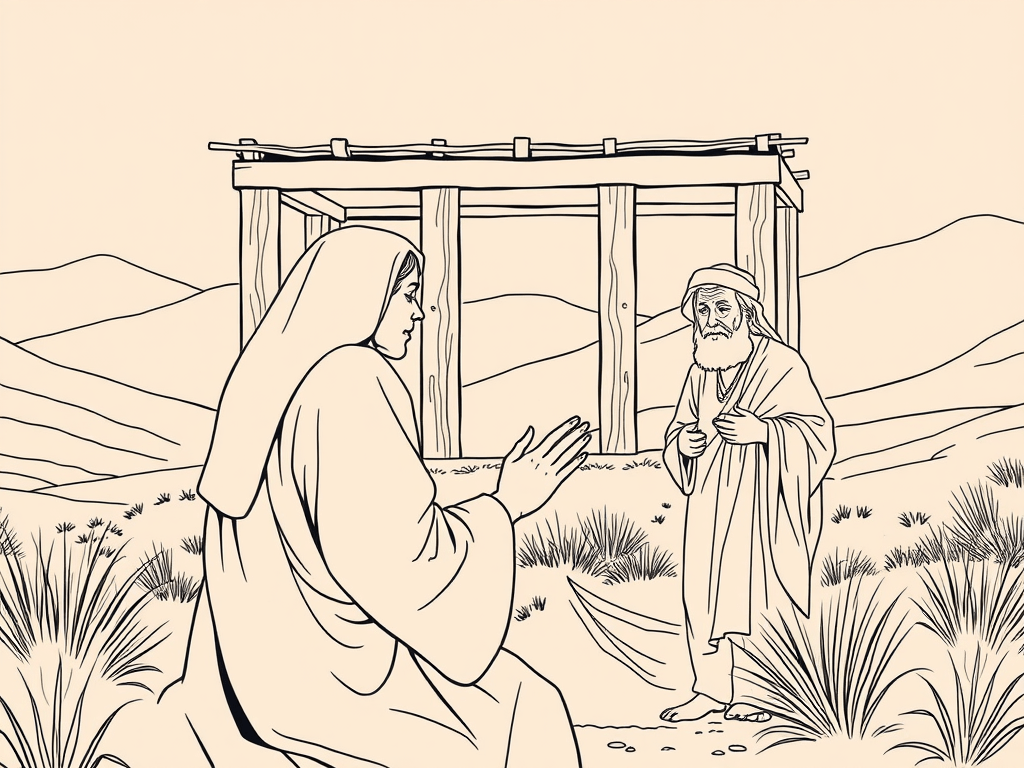
Join me at Ancient Shiloh, once the spiritual epicenter of Israel.
In this gripping journey through Scripture and archaeology, discover how Shiloh transformed from the resting place of the Tabernacle into a haunting reminder of Israel’s disobedience.
Through prophetic warnings, tragic events, and one woman’s faithful prayer, Shiloh tells a powerful story—one of Israel’s failure, God’s judgment, and unshakable hope.
Did We Find the Tabernacle? Insights from Scott Stripling
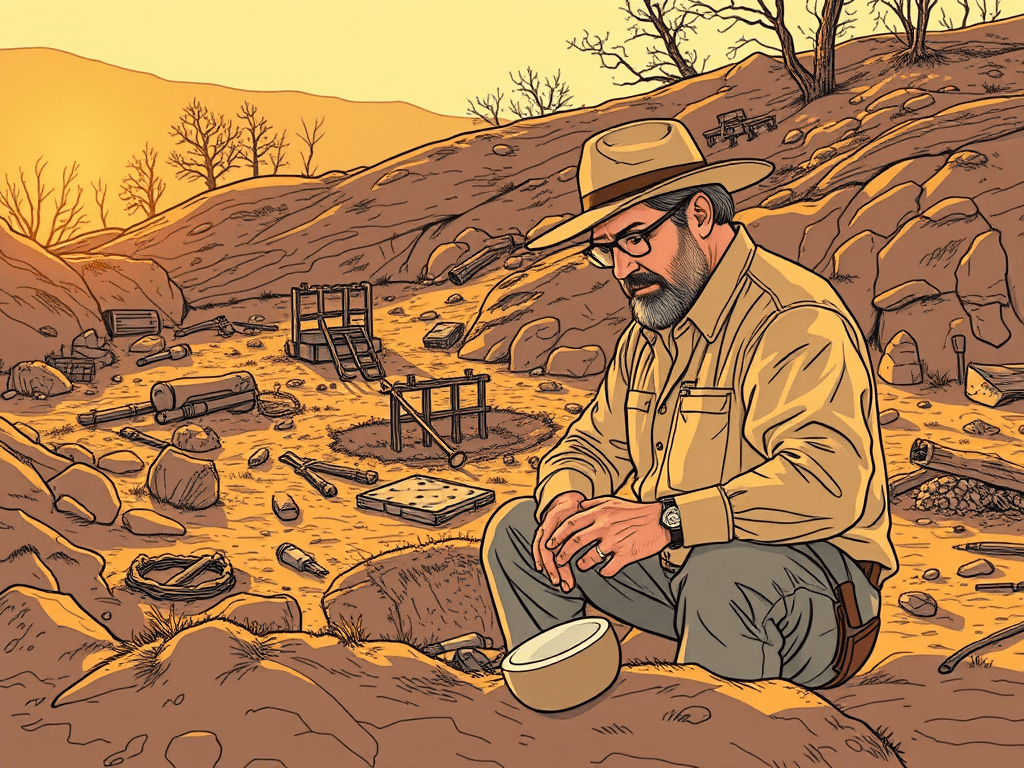
Join me for an interview with Scott Stripling, who has been excavating Shiloh for many years.
We talked about the history of the pursuit of the Tabernacle and whether it was found at last.
How the Tribes of Israel Got Their Inheritance In Shiloh
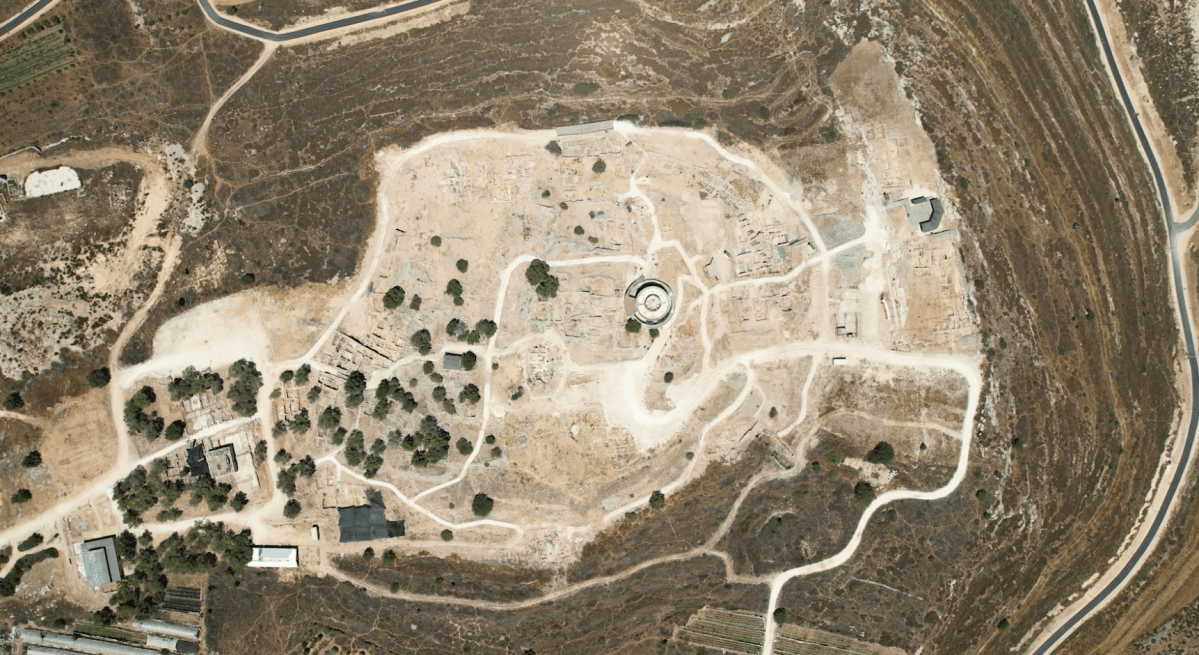
Watch this video that explains the distribution of the land between seven tribes in Shiloh
Digging Under Fire
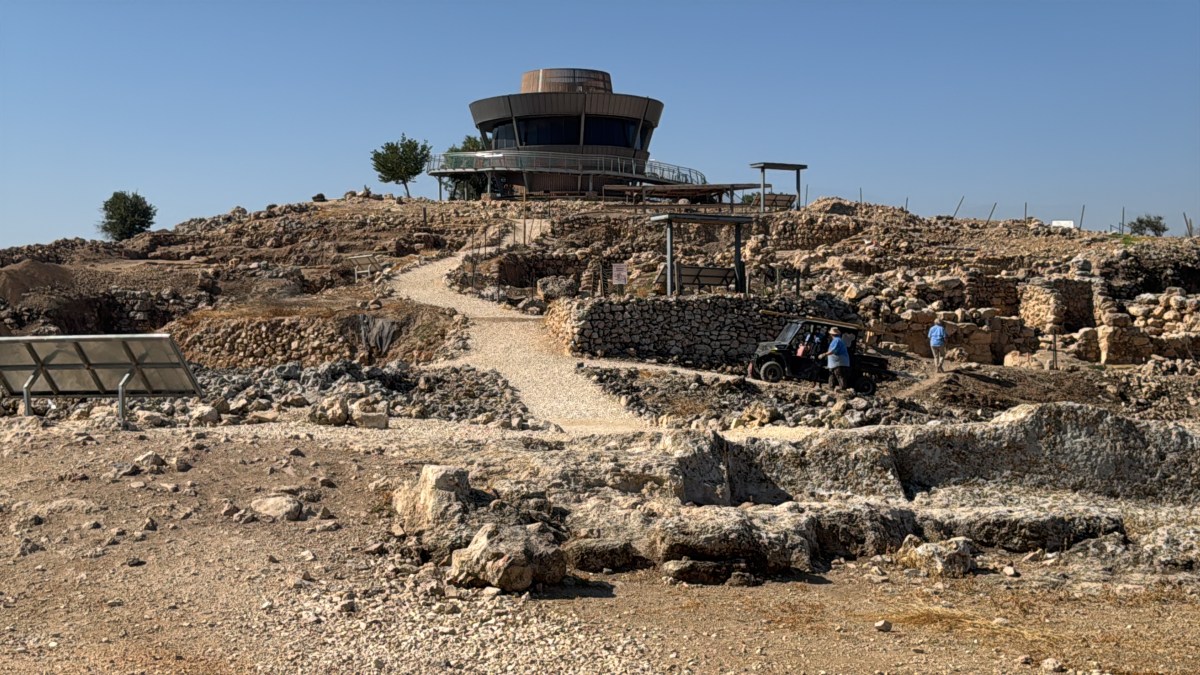
During the war between Israel and Iran in June 2025, I went to interview Dr. Scott Stripling, who continued excavation in Shiloh even when missiles were flying over his team’s heads.
Where is Ebenezer?

In the well-known hymn “Come Thou Fount of Every Blessing,” we sing:
“Here I raise my Ebenezer;
hither by thy help I’m come;
and I hope, by thy good pleasure,
safely to arrive at home.
Jesus sought me when a stranger,
wandering from the fold of God;
he, to rescue me from danger,
interposed his precious blood.”
Is Ebenezer an actual place or a parable? Let us read what the Bible has to say about it.
The Spiritual WAR behind Oct 7th

Ancient Amulet from the Alter at Mount Ebal (video)
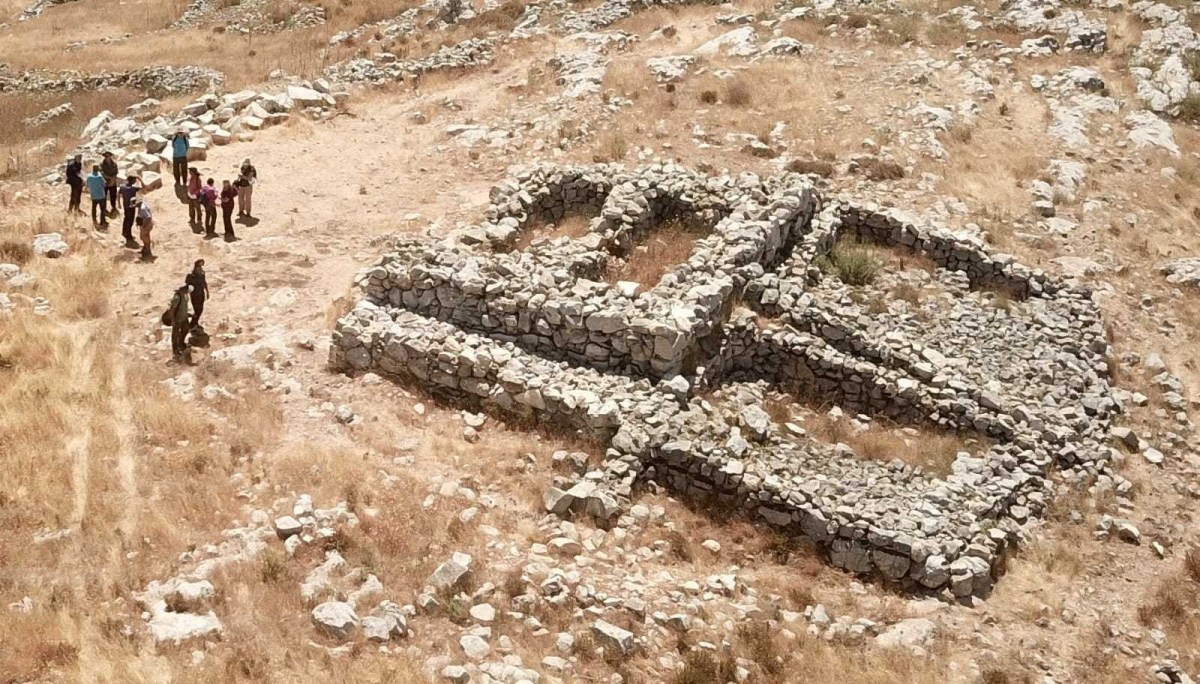
Find below my talk about the ancient amulet found in mount Ebal.
Why do people call Israel “Palestine”?
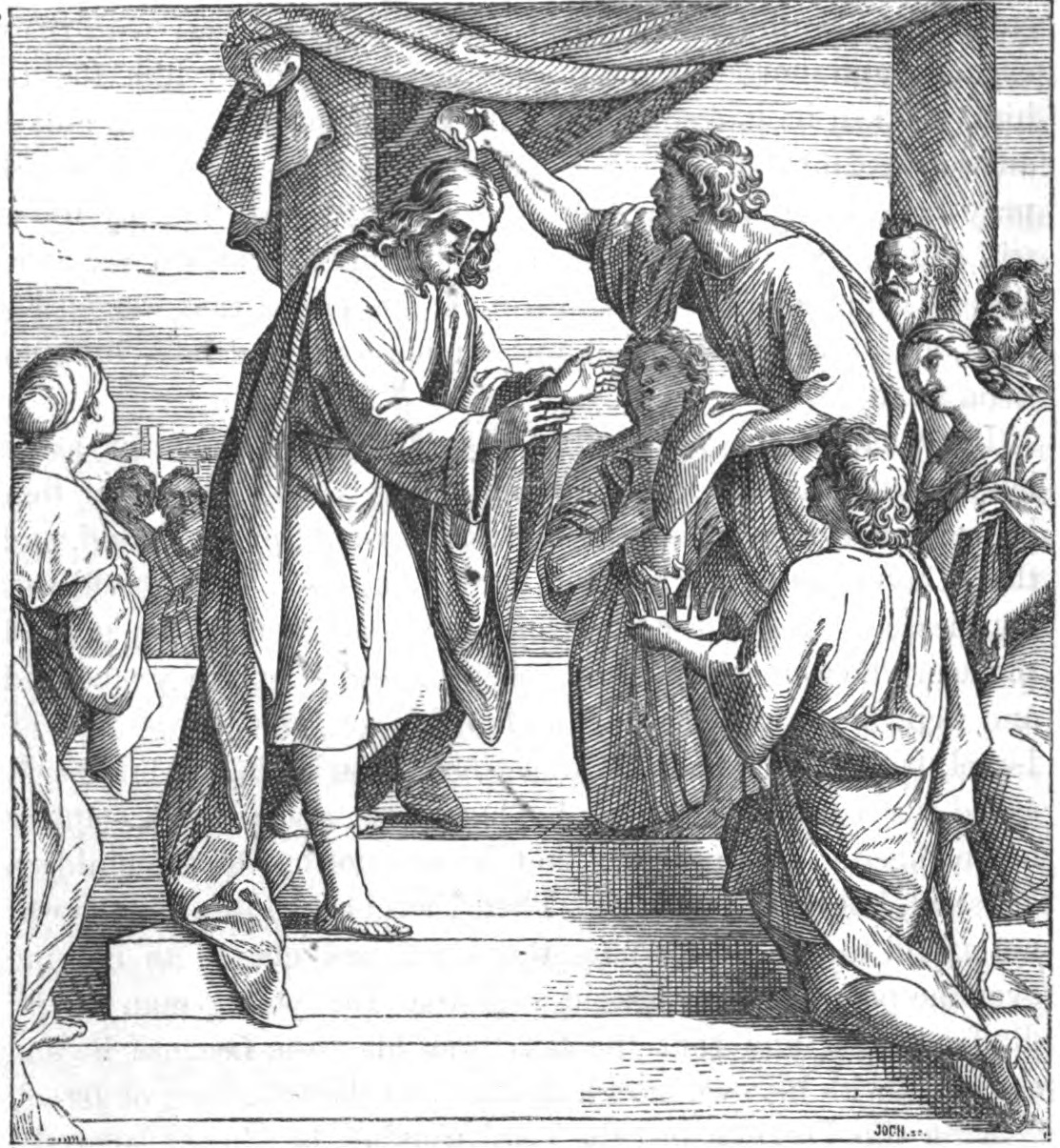
Anyone studying biblical history or reading books about this topic, may have noticed that the common name to refer to the country of Israel in the academic literature is not “Israel”, nor “Judah”, but “Palestine”. Why is this name so commonly used? Where did it come from?
Paul Lawrence, in his “Atlas of Bible History” explains:
Before the Israelite conquest the name of the Promised Land west of the Jordan was Canaan. Its inhabitants were Canaanites.
To avoid confusing we use the term “Palestine” to designate that region after the conquest, but this should not be interpreted a modern, political sense.
“Israel” and “Judah” are used to denote the historic nation states that later emerged.
Lawrence Paul, The IVP Concise Atlas of Bible History (IVP Academic, 2013), 48
Even if we agree that the term “Palestine” does not have a political meaning, it surely has a theological meaning, as we shall explain below.
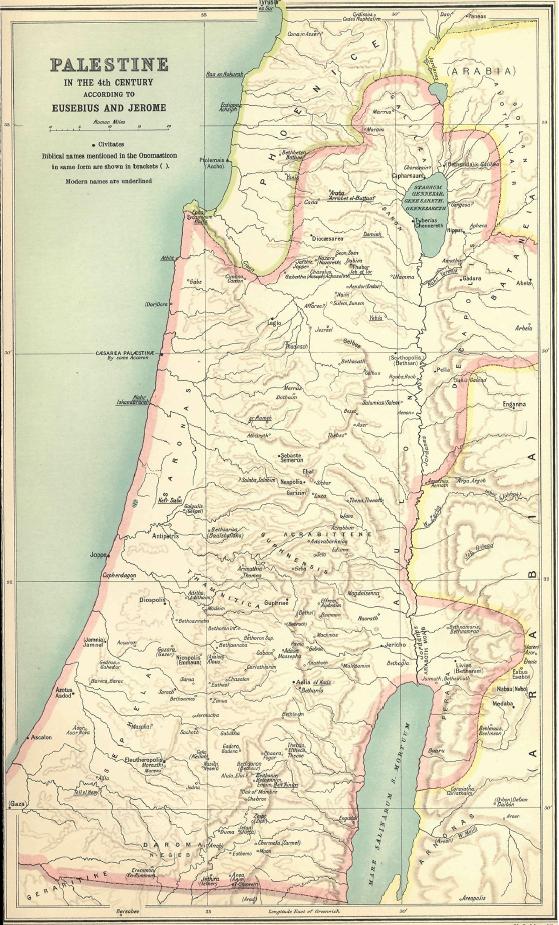
When was the term “Palestine” first used?
Although many biblical history scholars call the land “Palestine” in their articles and books, this term was never used in the Bible itself. The first to call the land of Israel “Palestine” were the Romans in the 2nd century AD, after they defeated the Bar-Kokhba revolt in 135 AD.
After the war against Judah ended Roman emperor Hadrian decided to officially change the name of the province “Judaea” to “Syria Palaestina”. Some scholars claim this name was already known before Hadrian. But nevertheless, the change of the name of the province came only after the Judean nation was completely destroyed and exiled.
Another proof of the Roman intention to wipe out the name Judaea and the bond of the Judeans to the land is the fact that they also changed the name of Jerusalem. The Romans exiled the Jews from Jerusalem and renamed it Aelia Capitolina.
The Romans, in the period they called “Pax Romana” – the Roman peace – wiped out Judah and made sure no remains are left of that nation. From this point in time, the name Judea was replaced on all maps by Syria-Palaestina, and all history books started to use the new name: Palaestina. Until this very day…
The origin of the name “Palaestina”
This name is derived from Philistia (Hebrew: פְּלֶשֶׁת), the name of the coastal area of Israel that was held in biblical times by the Philistines (Hebrew: פְּלִשְׁתִּים). Around the time the Israelites settled in Canaan, so too did the Philistines. They reached their height of power under Kings Saul and David, after which they began to diminish, ultimately being wiped out in 604 BC by King Nebuchadnezzar II.
In this small land, there were Canaanites, Philistines, Phoenicians, Edomites, Hellenists, Samaritans, and of course: Israelites and Judeans. How then, from all those nations, is it after the name of the Philistines that Hadrian called the land?
After all, the Philistines held a very small part of the southern coast of the land, and they were gone over 700 years before Hadrian time.
Political or Theological?
An act of political renaming of countries was used since ancient times. The name of the land affects how it is publicly known. Many countries changed their names after a change of regime to denote that they are a different entity. (e.g., Russia to the USSR and back to Russia, Burma to Myanmar, and many more examples).
So it makes sense that the Romans changed the name of Judaea. Did the name that they chose as the new name have any meaning for them? Was it just the most logical name to choose?
But the bigger question is, how come this name, that was invented as a “replacement” name by Rome, is still the name used today by scholars to refer to the land in the time of the Bible, when this name was not used?
An answer to the above question may be attributed to the early Church in the first centuries. The early theologians of the church had the idea that the Christian Church replaced Israel of the Bible. So, Israel is no more, and the Church is the “New Israel”. This replacement theology was the mainstream Christian perception of Israel and the Jews until the 20th century and until the new state of Israel was founded. The new state of Israel brought significant questions to the Church, and even the Catholic Church had to reconsider its approach to the Jews.
Then why is this name, “Palestine”, the name that the Arabs choose to identify with today? After all, this name has nothing to do with any Arab or Muslim legacy, and it is a memory of the Roman conquest and the Roman Catholic Church.
Do the Arabs who call themselves “Palestinians” affiliate with the Roman conquest of Judea or with the early church?
What is Palestine?
If we look at the history of the use of this name – Philistines/Palaestina/Palestine, we can see a “crimson thread” throughout time.
- The Philistines killed the first ‘anointed one of Israel’ – the first Messiah (Hebrew: מָשִׁיחַ), King Saul. They also tried to kill David, the anointed one who was a man after God’s own heart, but without success.
- The Romans used the name of the Philistines and renamed the land to “Palaestina”, hoping to eradicate the name of Israel and Judah forever.
- The early church followed Rome by trying to abolish the memory of historical Israel, believing that God abandoned His people.
- And in our modern era, the name “Palestine” is attributed to an entity that aims to replace the state of Israel.
What is common to this name throughout history is an attempt to destroy God’s plan of salvation through Israel and the Jews! Whenever someone uses this name, they try to replace Israel’s role in God’s plan..
For thousands of years, from King Saul up to our day, trying without success to abolish the plan of God that cannot be changed.

Why do the nations rage,
And the people plot a vain thing?
The kings of the earth set themselves,
And the rulers take counsel together,
Against the Lord and against His Anointed, saying,
“Let us break Their bonds in pieces
And cast away Their cords from us.”He who sits in the heavens shall laugh;
Psalms 2:1-6 [NIV]
The Lord shall hold them in derision.
Then He shall speak to them in His wrath,
And distress them in His deep displeasure:
“Yet I have set My King
On My holy hill of Zion.”
So next time you use the name “Palestine”, be sure you understand what you are saying.
 Ran Silberman