

1882 marks the inception of the Zionist movement. The first Zionist settlement was set up this year.
The village was founded in a swamp area in the Sharon and was called Petah-Tikva.
Joshua leads the sons of Israel into Canaan
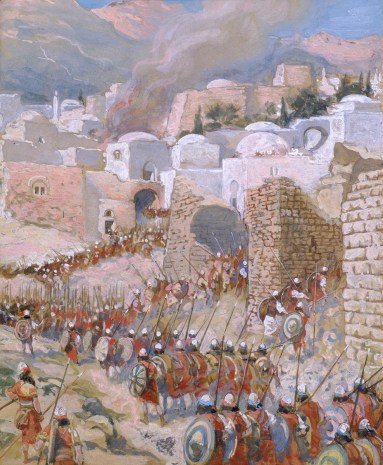
When the people of Israel entered Canaan from the east, they were not considered Zionists. Zion was a place they had not heard about yet.
God had commanded them to conquer the country from the seven Canaanite nations that inhabited the land.
The first city they conquer and destroy was Jericho. Two spies went to Rahab’s house, and she hid them. For seven days, the people of Israel marched around the city; on the seventh day, they blew trumpets, and the walls came down. God was undeniably with the people of Israel.
Joshua warned the people not to take anything from the city, as it is under a ban.
Then, they went on to conquer the second city – Ai, but they failed badly… Something went wrong. Joshua cried to the Lord and asked – Why is that, Lord? and the answer came clearly:
Israel has sinned, and they have also transgressed My covenant which I commanded them. For they have even taken some of the accursed things, and have both stolen and deceived; and they have also put it among their own stuff. 12 Therefore the children of Israel could not stand before their enemies, but turned their backs before their enemies, because they have become doomed to destruction (Joshua 7:11-12)
The Lord instructed Joshua on how to find the person who did wrong. It came out that it was Achan from the tribe of Judah.
Interestingly, in Chronicles, the name changes from Achan to Achar:
The son of Carmi was Achar, the troubler of Israel, who transgressed in the accursed thing (1 Chronicles 2:7)
This is interesting, because the Hebrew word for “trouler” in the Bible is “Ocher“, which is from the same root as the name “Achar” and literally means “bring trouble or darkness“.
Achan, with all his family, was sentenced to be stoned. Where did that happen? let’s read:
Then they raised over him a great heap of stones, still there to this day. So the Lord turned from the fierceness of His anger. Therefore the name of that place has been called the Valley of Achor to this day (Joshua 7:26)
The Hebrew root A.Ch.R. appears three times in our story:
- Achar (or Achan) – the name of the sinner
- Ocher – an adjective that means troubler, or literally “darkens”
- Achor – the valley where he was stoned. Near Jericho.

A prophecy of hope
Let’s move to another book in the Bible. Hosea.
Hosea speaks about the restoration of Israel.
In the second chapter of the book, he compares Israel to a treacherous wife. He describes all her harlotry and unfaithful ways.
But then the Lord takes her to the desert, and there, after all her lovers have left her, the Lord restores Israel. Then Hosea prophesies:
Then I will give her her vineyards from there,
And the valley of Achor as a door of hope (Hosea 2:15)
This verse takes us back to the story of Achan in the valley of Achor.
The Zionist movement begins
In the year 1872, a few families from Jerusalem tried to buy land in Jericho and build a new agricultural village. The name they wanted to give to the village was Petah-Tikva, which means “Entrance of Hope” to fulfill the prophecy of Hosea.
They were not successful in buying the land in Jericho, but ended up buying a swamp area in the Sharon from an Arab family in Jaffa.
Life was too hard in the swamp, and after three years, the village was abandoned.
Seven years later, in 1882, the village was restored by new settlers. This year marks the beginning of the first wave of Zionists moving to Israel and building new settlements.
The location of Petah Tikva in the Sharon instead of Jericho is a fulfillment of another prophecy:
Sharon will be a pasture land for flocks,
And the valley of Achor a resting place for herds (Isaiah 65:10)
The Zionist movement, just like Joshua, brought the people of Israel back to their land.
And the city of Petah Tikva is a symbol for the restoration of Israel.
 Ran Silberman