As shown in another post, the identification of animals and plants in the Bible may not always be straightforward. While translating the Bible to different languages in different countries, there was a need to use names known in the country of the translator, and this could sometimes lead to wrong interpretations. In some cases, there is still a lack of consensus about what the original meaning was.
In this post, I would like to examine which animal is called “fox” in the Bible, and which one is the “jackal”.
The Fox
Fox, in Hebrew: “Shu’al” (שׁוּעָל), is mentioned a few times in several books of the Bible.
Then Samson went and caught three hundred foxes; and he took torches, turned the foxes tail to tail, and put a torch between each pair of tails. (Judges 15:4)
The red fox, which is quite common in Israel, and certainly in the area where Samson was living, has a long, beautiful tail. Therefore, the identification of the animal seems easy.
But what would you say about the following verse:
Catch us the foxes, The little foxes that spoil the vines (Song of Solomon 2:15)
Foxes that spoil the vines?
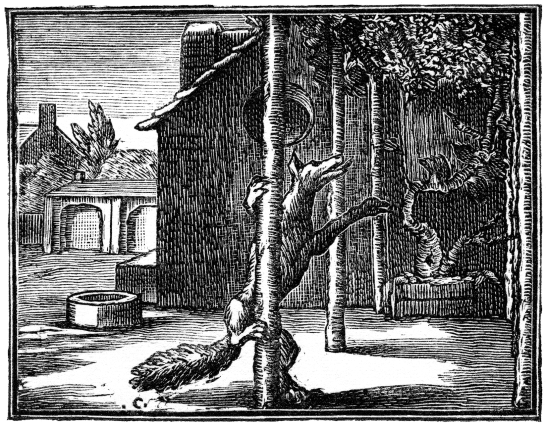
In the famous fable of Aesop, a fox wanted to eat grapes that were too high to reach. He therefore remarked that those grapes weren’t ripe yet.
Foxes do not eat fruits. Period. Why is it then that we read about this characteristic of the fox as a grape eater?
The Jackal
The Jackal is mentioned in the Bible more times than the fox and always in plural: “Tanim”, in Hebrew: (תַּנִּים)
The Bible attributes the jackal to living in the wilderness and desolate areas.
But Esau I have hated, And laid waste his mountains and his heritage For the jackals of the wilderness. (Malachi 1:3)
But You have severely broken us in the place of jackals, And covered us with the shadow of death. (Psalms 44:19)
I am a brother of jackals, And a companion of ostriches. (Job: 30:29)
I will make Jerusalem a heap of ruins, a den of jackals. I will make the cities of Judah desolate, without an inhabitant. (Jeremiah 9:11)
The jackal mentioned in the Bible appears to differ from the jackal we are familiar with today. The modern jackal is recognized as an animal that inhabits areas near human settlements rather than the wild.

Who is who?
Some Bible researchers came to the conclusion that, again, there was misinterpretation in the translation of the names into European languages.
The common agreement today is that Jackal in the Bible (“Tanim”) is not the jackal we know today, but rather a kind of owl that lives in the desert.
The fox, on the other hand, can relate sometimes to today’s fox and in other cases to the jackal.
This makes sense, as the fox is an animal that eats only small animals and has a long tail, whereas the jackal is known to be an omnivore – meaning that it can devour small animals but also eat fruits.
Archeology comes to our aid
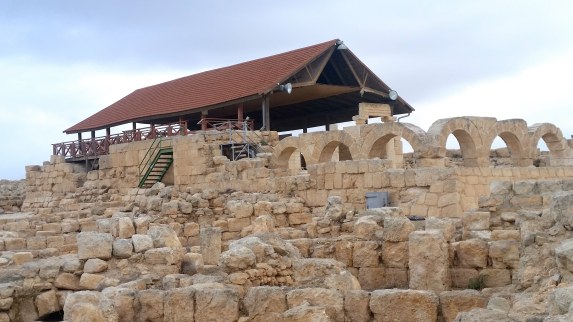
Recently, in a new excavation in the north of Israel, a mosaic from the Byzantine period was found with scenes from the stories of Samson.
Foxes appear in one of those scenes that resemble the fox that we know today. See at the bottom of the picture below:








 Ran Silberman