

The village known as Susya is found a few miles south of the city of Hebron. Archaeologists first excavated the site after the Six-Day War and found an ancient synagogue. Between 1984 and 1987, archaeologists conducted more thorough excavations and discovered many interesting facts in the village and the synagogue.
We know that the synagogue of Susya is one of four that were found in the area, all dated to the Byzantine period and the early Arab period: from the 3rd century to the 9th century AD.
We know of many synagogues from that period in the north of Israel, mostly in the Galilee and the Golan Heights. But the one in Susya is so unique that it raises many questions about the people who were living in that village.
The findings of Susya
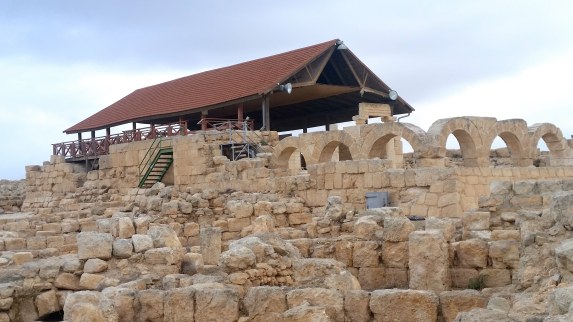
The Synagogue
The synagogue of Susya and the other three synagogues in the area are very distinct.
First, the plan of the building: Almost all synagogues in the north of the country have a rectangular shape with a Basilica plan. They are built on a North-South axis, and the people were praying to the south toward the direction of Jerusalem.
In the four synagogues in the area of Susya, the people were praying toward the north, which is the direction of Jerusalem, but the Synagogue of Susya itself is built as a rectangle with an east-west axis. Although it has a basilica plan, it does not have two rows of columns that are typical of synagogues or churches built in the Byzantine period.
As this is very unique, we cannot tell for sure what is the reason for this different plan. Some scholars believe that this is due to the different culture among the Jews in the south of Judea, who were remote from the Jews of Galilee.
In almost all synagogues in the country from the Byzantine period, there are dedication inscriptions that mention the names of people who contributed to building. The inscriptions are generally written in Aramaic or Greek. In Susya, we see some inscriptions that are written in Hebrew, which is rare.
Ritual baths
More than 40 Mikvahs (Jewish ritual baths) were found in the small village of Susya. This is unique in the Byzantine period: In the Second Temple period, we know of many Mikvahs in Jerusalem and also in Qumran. But in the Byzantine period, there is no other example of so many Mikvahs as in Susya.
Menorah
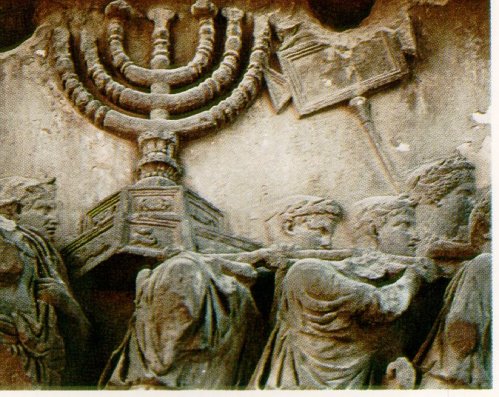
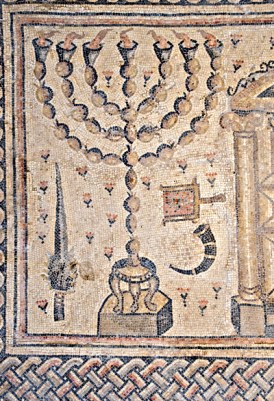
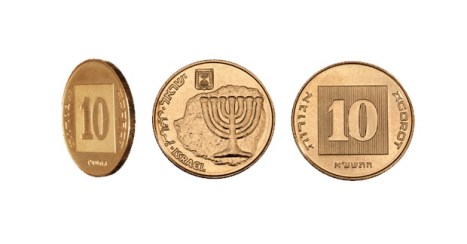
Menorahs were found in Susya in many forms: Engraved on stones, on mosaics in the floor of the Synagogue, and one very special: a real Menorah that was probably used for ritual ceremonies in the Synagogue and that imitates the menorah of the Temple that was already destroyed at that time.

What do scholars say about the people of Susya
What can we tell about the people of Susya?
We know that at the time they lived there, the center of Jewish life in the country was in the north, the Galilee. So they were probably separated, not completely, but far enough to have their own customs. This can explain the writing in Hebrew, and the different plan of the synagogue.
So what is the issue with the Mikvahs? more than 40 of them? And the Menorahs?
Well, this may have been a community of very devoted people.
Some scholars suggest that they saw themselves as priests and maybe referred to the Cohen and Zadok priestly families.
We cannot be really sure. When you find a unique archeological finding that is not known in any other locations, it is really hard to conclude the meaning of it.
Yet another theory
Another inscription was found on the floor of the synagogue in Susya that may suggest another solution.
The inscription is a short Aramaic verse that looks like a simple dedication inscription.
The translation to English is:
… be mentioned for good the comforter Yeshua the witness …
This short sentence contains a number of intriguing points.
First, the name Yeshua. This was probably a common name at that time, but it is also the name of Jesus from Nazareth.
Second, the adjective comforter. It is not common to call a person who contributed to a building a comforter. We do not see this in any other place.
And third, the word witness that can be better translated to “the one who testifies”. Again, not a word you expect to describe a person who contributed money to a synagogue.

One theory suggests that the inhabitants of Susya were Jewish individuals who accepted Yeshua as the Messiah of Israel.
It’s plausible that Jews who believed in Yeshua resided in the country during that era, given that Jews from Israel were the originators of Christianity.
While proving or disproving theories about ancient Susya’s people may be out of reach, we can still visit the location to admire its beauty and remarkable finds.




 Ran Silberman