Where is the city of Ai?

“Now Joshua sent men from Jericho to Ai, which is beside Beth Aven, on the east side of Bethel” (Joshua 7:2)
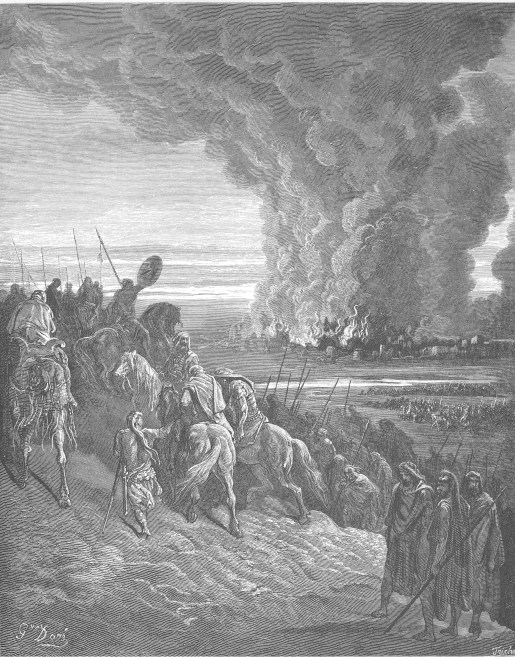
049.Joshua_Burns_the_Town_of_Ai

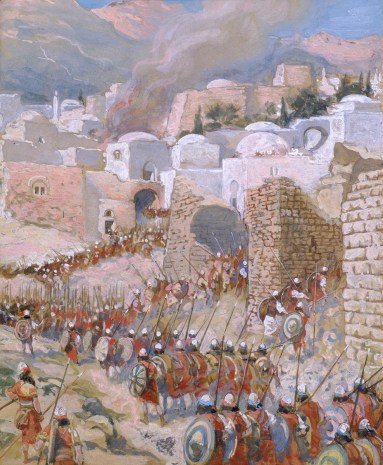
The city of Ai is the second city that the sons of Israel conquered in the land of Canaan, after Jericho.

The identification of the location of the city of Ai is one of the most controversial topics in Biblical archeology and research.

As explained in another post, many of the names of Biblical sites are revealed in the names of Arab villages.

Two of the places quoted above from Joshua 7:2 are identified using an Arab synonym of existing places:

  1. Jericho is identified very well with the Arab name of the city, which today is called Aricha.
  2. Bethel in the Bible is identified as the Arab village of Beitin.

The other two places, Ai and Beth-Aven, do not have an Arab village name that preserves their location.

What did the writer of the book of Joshua know?

Looking back to the quoted text, you may notice something very interesting: The writer needs to explain where the Ai is, and he explains this by referring to two different places: “Ai, which is beside Beth Aven, on the east side of Bethel“.

What is the meaning of this? Well, obviously, when this book was edited, people did not know where the Ai was, but they DID know where Bet-Aven and Bethel wereSo the writer could tell them the location by reference.

For example, if a visitor comes to your city and asks you where the location of a certain bank branch is? You may tell him: “Go to the central station, and three blocks after McDonald’s, you will see the bank”. You give instructions to a place that is unknown by referring to places that are known.

Another such example can be found about Shiloh in the book of Judges:

“There is a yearly feast of the Lord in Shiloh, which is north of Bethel, on the east side of the highway that goes up from Bethel to Shechem, and south of Lebonah” (Judges 21:19)

Here again, in the time that the book was written, Shiloh did not exist (was destroyed by the Philistines in the battle of Ebenezer). So it was pointed by reference to Bethel, Shechem, and Lebonah that existed at that time.

Back to our topic: we learn that the location of the Ai was not known at the time of writing the book of Joshua, but Bethel and Beth-Aven were known. This fact will be very important later when trying to identify where the Ai was!

Archeological Embarrassment

“And he moved from there to the mountain east of Bethel, and he pitched his tent with Bethel on the west and Ai on the east; there he built an altar to the Lord and called on the name of the Lord.” (Genesis 12:8)

Another quote about Abraham that set his tent “with Bethel on the west and Ai on the east” led American Biblical scholar Edward Robinson, and later William Foxwell Albright, to identify the Ai with a little hill that is called in Arabic ״Et-Tell״. The location was perfect! Even the Arabic name Et-Tel, which means “The ruin,” was a good sign as Ai in Hebrew also means “heap of ruins”.

In the 1930s, the first archeological expedition excavated the place. The archaeologists started with great excitement, and the Baron Rothschild funded the excavation. Everyone thought that they were going to bring the story of the Bible to life.

But then, a bitter surprise: In 1935, after examining the findings of Et-Tel, the report showed that indeed there was a Canaanite city in this place. The city had a wall, a fortified palace, and a Canaanite temple. And this city was burned to ashes around 2100 BC.  Around 1000 BC, during the early Israelite period, a small village was built again on the site for about 200 years.

Could it be that the sons of Israel, led by Joshua, burned that big city? NO!!! The conquest of Canaan by Israel dates to, according to different scholars, between 1450 BC and 1200 BC. Those who count according to the Bible take the earlier date, and other archeologists choose the later date.

But in any case, when Joshua entered Canaan, the fortified city that was found in the ruins in Et-Tell was already destroyed for at least 600 years!
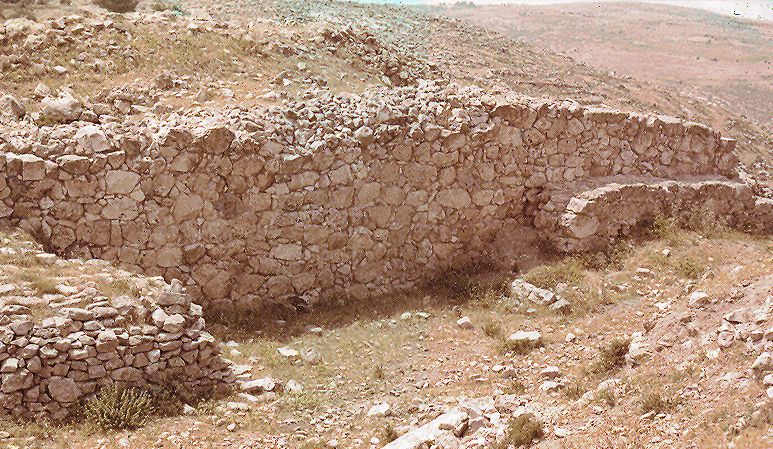
Homat_hai_1

How can we sort out this confusion?

The resolutions to what was found in the excavations in Et-Tell went in two different directions, depending on the point of view of the beholder:

  1. Those who wanted to refute the Bible as historical evidence concluded that the Bible was just not right and Joshua did not conquer the Ai. Instead, they said, there was evidence of a place that was burned in history, and the ancient Jews told the story that it was Joshua who burned it.
  2. Those who believed that the Bible was true claimed that Et-Tell was just a wrong identification. The Ai is out there somewhere and is yet to be discovered.
  3. Recently, other scholars suggested that Et-Tell is the Ai, but the city from the time of Joshua has not yet found by archaeologists.

Read in this article more about the debate between those who try to affirm the Bible through archeology and those who try to refute it.

I want to focus on one very interesting solution to this perplexity that was suggested by Prof. Yehoshua Meir Grints, who was a Bible scholar at Tel Aviv University. His analysis is described again by Prof. Yoel Elitzur in his book: Places in the Parashah.[1]

Let’s go back to our key verses:

  1. “He pitched his tent with Bethel on the west and Ai on the east” (Gen. 12:8)
  2. Ai, which is beside Beth Aven, on the east side of Bethel” (Josh. 7:2)

In Genesis, the Ai is east of Bethel, and Beth-Aven is not mentioned. In Joshua, the Ai is still east of Bethel, but we also find that it is beside Beth-Aven.

Grints concluded that the three cities, Bethel, Ai, and Beth-Aven, were indeed close to one another, but have not existed simultaneously all the time. In the time of Abraham (or the time of writing Genesis), the Ai existed, but Beth-Aven did not. Where in the time of editing the book of Joshua, Beth-Aven existed, but the Ai did not.

Grints collected all the places in the Bible where the three cities appear and found out something quite surprising:

Bethel existed from the time of the patriarchs until the return to Zion in the time of Cyrus.

The Ai existed most of the time of the Bible, except for the time after it was destroyed by Joshua, and then it was rebuilt during the time of the Israelite kings.

Beth-Aven, on the other hand, existed only in the time of Joshua, Judges, and Samuel.

The suggestion is that the two cities, the Ai and Beth-Aven, did not co-exist. In each period, only one of them stood in its place.

Going back to the excavations in Et-Tell, it is most likely that this site is Beth-Aven and not the Ai!

Map Of Bethel And Ai 1

Summary

The place that was found and was originally identified as the Ai (Et-Tell) might not be the Ai. It may be the ruins of Beth-Aven.

So where is the Ai? We don’t know. This may be found in the future. But it is also possible that it will never be found. As it is written:

“So Joshua burned Ai and made it a heap forever, a desolation to this day” (Joshua 8:28)
Continue reading “Where is the city of Ai?”

Good Samaritan, Bad Samaritan


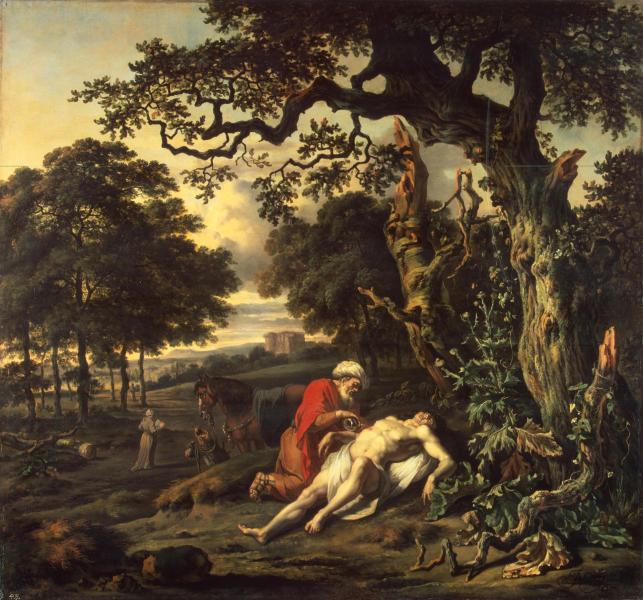
Jan_Wijnants_-_Parable_of_the_Good_Samaritan

“A certain man went down from Jerusalem to Jericho, and fell among thieves, who stripped him of his clothing, wounded him, and departed, leaving him half dead. 31 Now by chance a certain priest came down that road. And when he saw him, he passed by on the other side.32 Likewise a Levite, when he arrived at the place, came and looked, and passed by on the other side. 33 But a certain Samaritan, as he journeyed, came where he was. And when he saw him, he had compassion. 34 So he went to him and bandaged his wounds, pouring on oil and wine; and he set him on his own animal, brought him to an inn, and took care of him…” (Luke 10:30-34)

This is the story told by Yeshua in the New Testament known as the parable of “The Good Samaritan”.

Samaritans still live today in the area called Samaria (Shomron in Hebrew). When asked, the Samaritans say they are the descendants of the ten tribes of Israel, which were sent to exile by the Assyrians in the 8th century B.C. A few of them remained in the land and formed the people known today as “Samaritans”.

In the New Testament, the Samaritans are mentioned several times, but nothing is said about who they are or what their origin is.

From the New Testament, we learn some interesting facts about them:

So He came to a city of Samaria which is called Sychar, near the plot of ground that Jacob gave to his son Joseph. Now Jacob’s well was there. Jesus therefore, being wearied from His journey, sat thus by the well. It was about the sixth hour. A woman of Samaria came to draw water. Jesus said to her, “Give Me a drink.” For His disciples had gone away into the city to buy food Then the woman of Samaria said to Him, “How is it that You, being a Jew, ask a drink from me, a Samaritan woman?” For Jews have no dealings with Samaritans.

….12 Are You greater than our father Jacob, who gave us the well, and drank from it himself, as well as his sons and his livestock?”…

19 The woman said to Him, “Sir, I perceive that You are a prophet. 20 Our fathers worshiped on this mountain, and you Jews say that in Jerusalem is the place where one ought to worship.” (John 4:1-20)

Four facts we can learn from this short story:

  1. Samaritans lived in Shechem and were the main residents there in the 1st century AD
  2. They considered themselves the sons of Israel (Jacob)
  3. Jews and Samaritans did not see themselves as one people
  4. Samaritans worshiped on Mount Gerizim and not in Jerusalem

All those points are still valid today: The Samaritans reside in Shechem, they see themselves as sons of Israel, they do not see themselves as Jews, and they claim that Mount Gerizim is where the God of Israel commanded to worship.

And in fact, the Samaritans follow the laws from the Torah like the Jews. They celebrate the feasts like the Jews. In the picture below, we can see Samaritans celebrating Pesach on Mount Gerizim.

samaritans2

What does the Bible say?

In the Old Testament, there is one hint that supports what the Samaritans say about themselves being descendants of Israel:

In the book of Jeremiah, after the people of Judah had been sent to exile by the Babylonians (150 years after the people of the kingdom of Israel had been exiled by Assyria), the Babylonians nominated a new leader who wasn’t from the seed of the kings: Gedaliah, the son of Ahikam.

In Jeremiah 40-41, we read about the assassination of Gedaliah by his foe, Ishmael, son of Nethaniah. After Ishmael killed Gedaliah, we read the following:

And it happened, on the second day after he had killed Gedaliah, when as yet no one knew it, that certain men came from Shechem, from Shiloh, and from Samaria, eighty men with their beards shaved and their clothes torn, having cut themselves, with offerings and incense in their hand, to bring them to the house of the Lord. (Jeremiah 41:4-5)

Some people living in the cities of the previous kingdom of Israel came to sacrifice in the Temple. Who were those people? Jews? remaining of the Israelites? Foreigners? the auther does not tell us. But we know for sure that people living in the cities of Samaria came to the Temple in Jerusalem many years after the exile of Samaria.

(Samaria – Shomron: In the Old Testament, it is used as the name of a city, the capital of the northern kingdom of Israel. In the time of the Second Temple and in the New Testament and even today, Samaria refers to the mountains north of Judea).

Proselytes by Lions

In later Jewish texts, the Samaritans are referred to as “Men of Cuth” and “Proselytes of Lions”.

This is based on what we read in II Kings 17. The text describes what was done in the land of the kingdom of Israel after the exile of Israel:

24 Then the king of Assyria brought people from Babylon, Cuthah, Ava, Hamath, and from Sepharvaim, and placed them in the cities of Samaria instead of the children of Israel; and they took possession of Samaria and dwelt in its cities. 25 And it was so, at the beginning of their dwelling there, that they did not fear the Lord; therefore the Lord sent lions among them, which killed some of them. 26 So they spoke to the king of Assyria, saying, “The nations whom you have removed and placed in the cities of Samaria do not know the rituals of the God of the land; therefore He has sent lions among them, and indeed, they are killing them because they do not know the rituals of the God of the land.” 27 Then the king of Assyria commanded, saying, “Send there one of the priests whom you brought from there; let him go and dwell there, and let him teach them the rituals of the God of the land.” 28 Then one of the priests whom they had carried away from Samaria came and dwelt in Bethel, and taught them how they should fear the Lord

29 However every nation continued to make gods of its own, and put them in the shrines on the high places which the Samaritans had made, every nation in the cities where they dwelt…

34 To this day they continue practicing the former rituals; they do not fear the Lord, nor do they follow their statutes or their ordinances, or the law and commandment which the Lord had commanded the children of Jacob, whom He named Israel

According to what is written here, those who call themselves Samaritans are not from the seed of the sons of Israel, but rather people from the Assyrian Empire who were moved to Israel and learned partially how to worship the God of Israel, without much success!

The Jews and the Samaritans became political foes in the time of the return to Zion from Babylon.

The Samaritans sent a letter to the Persian king asking him not to let the Jews build a Temple:

From Rehum the commander, Shimshai the scribe, and the rest of their companions—representatives of the Dinaites, the Apharsathchites, the Tarpelites, the people of Persia and Erech and Babylon and Shushan, the Dehavites, the Elamites, 10 and the rest of the nations whom the great and noble Osnapper took captive and settled in the cities of Samaria and the remainder beyond the River—and so forth.

11 To King Artaxerxes from your servants, the men of the region beyond the River, and so forth:

12 Let it be known to the king that the Jews who came up from you have come to us at Jerusalem, and are building the rebellious and evil city, and are finishing its walls and repairing the foundations. 13 Let it now be known to the king that, if this city is built and the walls completed, they will not pay tax, tribute, or custom, and the king’s treasury will be diminished. (Ezra 4:9-13)

Later on, when Nehemiah comes to Zion and wants to build a wall around the city of Jerusalem, we read about some local people who want to stop him.

But it so happened, when Sanballat heard that we were rebuilding the wall, that he was furious and very indignant, and mocked the Jews. And he spoke before his brethren and the army of Samaria, and said, “What are these feeble Jews doing? Will they fortify themselves? Will they offer sacrifices? Will they complete it in a day? Will they revive the stones from the heaps of rubbish—stones that are burned?”

Now Tobiah the Ammonite was beside him, and he said, “Whatever they build, if even a fox goes up on it, he will break down their stone wall.” (Nehemiah 4:1-3)


Where is the place to worship?

Back to the Samaritan woman at the well:

Our fathers worshiped on this mountain, and you Jews say that in Jerusalem is the place where one ought to worship.” (John 4:20)

How did it come that the Samaritan claim Mount Gerizim to be the place to worship? Where did they take it from? If they are indeed the sons of Israel, and they read the Torah, where does it say so?

Well, the Torah does not mention where the place of worship is. Only later in 2 Samuel, God made his covenant with David, and Jerusalem was chosen.

But in the five books of the Torah, the place to worship is yet to be defined, or it can be understood that this place can move from place to place.

In many places in Deuteronomy, we read:

“the place where the Lord your God chooses, to put His name for His dwelling place.”

Deu 12:5, Deu 12:11, Deu 12:14, Deu 14:23, Deu 15:2 and many more.

After the sons of Israel had entered the land, the Ark moved from place to place: Jericho, Mount Ebal, Shilo, Bethel, Kirjath Jearim, and finally Jerusalem.

We also know that the kings of the northern kingdom of Israel did not want their people to go to Jerusalem. Jeroboam sanctified Bethel to stop the Israelites on their way to Jerusalem.

So the Samaritans, who have not accepted the legacy of David’s seed, and who have not read any of the books of the Bible after the first five books of the Torah, do not accept Jerusalem as the place that God chose.

The first Altar that Joshua built was on Mount Ebal, opposite Mount Gerizim. Mount Ebal was the mountain of the curse, whereas Mount Gerizim was the mountain of blessing. But the Samaritans do not read the book of Joshua either.

They claim that Mount Moriah and the mountain of the first altar of Joshua are, in fact, Mount Gerizim.

picture: Mount Gerizim

Footnote

The Samaritan people are today about 800 people worldwide. Half of them live in a neighbourhood on top of Mount Gerizim, and the second half in the city of Holon in Israel.


Foxes and Jackals

fox_grapes

As shown in another post, the identification of animals and plants in the Bible may not always be straightforward. While translating the Bible to different languages in different countries, there was a need to use names known in the country of the translator, and this could sometimes lead to wrong interpretations. In some cases, there is still a lack of consensus about what the original meaning was.

In this post, I would like to examine which animal is called “fox” in the Bible, and which one is the “jackal”.

The Fox

Fox, in Hebrew: “Shu’al” (שׁוּעָל), is mentioned a few times in several books of the Bible.

Then Samson went and caught three hundred foxes; and he took torches, turned the foxes tail to tail, and put a torch between each pair of tails. (Judges 15:4)

The red fox, which is quite common in Israel, and certainly in the area where Samson was living, has a long, beautiful tail. Therefore, the identification of the animal seems easy.

But what would you say about the following verse:

Catch us the foxes, The little foxes that spoil the vines (Song of Solomon 2:15)

Foxes that spoil the vines?

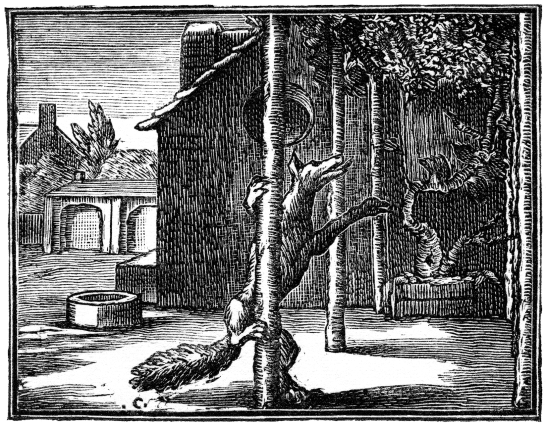
In the famous fable of Aesop, a fox wanted to eat grapes that were too high to reach. He therefore remarked that those grapes weren’t ripe yet.

Foxes do not eat fruits. Period. Why is it then that we read about this characteristic of the fox as a grape eater?

The Jackal

The Jackal is mentioned in the Bible more times than the fox and always in plural: “Tanim”, in Hebrew: (תַּנִּים)

The Bible attributes the jackal to living in the wilderness and desolate areas.

But Esau I have hated, And laid waste his mountains and his heritage For the jackals of the wilderness. (Malachi 1:3)

But You have severely broken us in the place of jackals, And covered us with the shadow of death. (Psalms 44:19)

I am a brother of jackals, And a companion of ostriches. (Job: 30:29)

I will make Jerusalem a heap of ruins, a den of jackals. I will make the cities of Judah desolate, without an inhabitant. (Jeremiah 9:11)

The jackal mentioned in the Bible appears to differ from the jackal we are familiar with today. The modern jackal is recognized as an animal that inhabits areas near human settlements rather than the wild.

Canis_aureus_-_golden_jackal.jpg

Who is who?

Some Bible researchers came to the conclusion that, again, there was misinterpretation in the translation of the names into European languages.

The common agreement today is that Jackal in the Bible (“Tanim”) is not the jackal we know today, but rather a kind of owl that lives in the desert.

The fox, on the other hand, can relate sometimes to today’s fox and in other cases to the jackal.

This makes sense, as the fox is an animal that eats only small animals and has a long tail, whereas the jackal is known to be an omnivore – meaning that it can devour small animals but also eat fruits.

Archeology comes to our aid

Recently, in a new excavation in the north of Israel, a mosaic from the Byzantine period was found with scenes from the stories of Samson.

Foxes appear in one of those scenes that resemble the fox that we know today. See at the bottom of the picture below:

hokuk


King Solomon’s Mines

haggard-king-solomons-mines

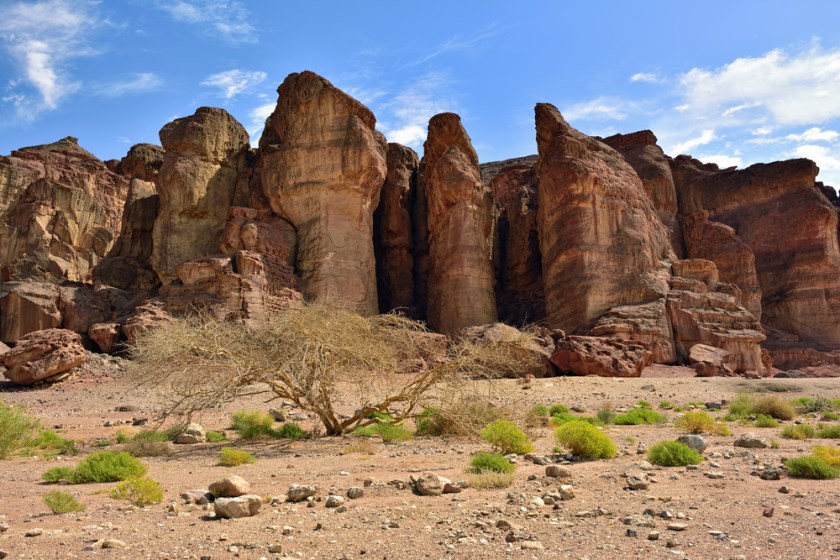
The book: King Solomon’s Mines is a novel from the 19th century written by H. Rider Haggard. The book was inspired by the discovery of ancient copper mines in the south of the Aravah in “Timna”, close to the Red Sea.

The Bible does not mention the mines that Solomon had dug. So, referring those ancient mines to King Solomon came from three places in the Bible:

a land in which you will eat bread without scarcity, in which you will lack nothing; a land whose stones are iron and out of whose hills you can dig copper. (Deuteronomy 8:9)

From this verse in Deuteronomy, we learn that there were iron and copper mines in Canaan before the sons of Israel conquered it.

… King Solomon also built a fleet of ships at Ezion Geber, which is near Elath on the shore of the Red Sea, in the land of Edom (1 Kings 9:26)

The verse above tells that Solomon had ships in the Red Sea. So the copper mines near the Red Sea could have been one of the resources of the wealth of Israel in his time.

… All these articles which Huram made for King Solomon for the house of the Lord were of burnished bronze. 46 In the plain of Jordan the king had them cast in clay molds, between Succoth and Zaretan. 47 And Solomon did not weigh all the articles, because there were so many; the weight of the bronze was not determined. (1 Kings 7:45-47)

From the verses above, we learn that a great amount of bronze was cast in Israel in the Jordan Valley. Bronze is an alloy of copper and tin.

When ancient mines were found in Timna, they were immediately referred to King Solomon. Nelson Glueck, the first archaeologist to excavate Timna, attributed the site to King Solomon and named it “King Solomon’s mines”.

raffaellosanziojudgementsolomon

Archeological finding refute the relation to Solomon

For thirty years, it was widely accepted that those copper mines were built by King Solomon, until the year 1969.

That year, the Israeli archaeologist Benno Rothenberg found an Egyptian temple in Timna, which was dated to 200-300 years before the time of Solomon.

More research and excavations revealed the techniques that were used at the site, and more Egyptian references.

When you visit the site today, you can learn all about copper mining in ancient times and about the Egyptian dominance in this area.

It was well agreed among all scholars that the site was abandoned before the time of David and Solomon and therefore cannot be referred to them.

For the last 50 years, there has been a movement of archaeologists who have tried to refute the historical validity of what is written in the Bible.

It is such a strong approach in the academy that almost every site that was identified with a Biblical story only 70 years ago is now considered incorrect.

Yigael Yadin, the famous Israeli archaeologist who was also the Chief of Staff of the IDF, excavated many sites in Israel and found evidence to support the correctness of the Bible. From the late 60’s of the last century, the fashion changed, and all his findings were being refuted one after another.

Recent findings change the picture again

Timna-Textile1-1

In 2009, another archeological expedition arrived at Timna led by Dr. Erez Ben-Yosef from Tel Aviv University.  This group wanted to date the site and find out who the people working in it were.

In 2012, they concluded their work with new evidence that changed everything that was known before.  See the article in: A New Chronological Framework for Iron Age Copper Production at Timna (Israel)

They were able to find organic material that they could date using the radiocarbon dating method. The organic samples include small pieces of cloth, ropes, and other textiles, various types of uncharred seeds (olive pits, grape and date seeds, pistachio, and more), and wood, including small twigs of acacia trees.

The extreme dry and hot climate of Timna helped preserving this organic materials for thousands of years. Just like the case of the Dead Sea Scrolls.

The examination led to the conclusion that most of the mining done in Timna took place after the Egyptians already left the place and is dated to the 10th century B.C.

Dr. Ben-Yosef also suggests that local Edomite tribes were living in the area and developed the skill of mining.

This brings us the new theory about the place: In the time of King Solomon (10th century B.C.) The Edomites were mining copper in Timna. The Israelites under King Solomon could be in political control over this place, just as written in the Bible.

shutterstock_268227944
Solomon’s Pillars in Timna


Enigma: Who were the people living in the ancient Jewish village of Susya?

Screen Shot 2018-01-03 at 22.39.57.png

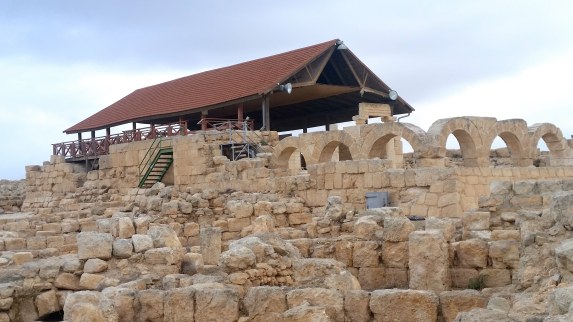
The village known as Susya is found a few miles south of the city of Hebron. Archaeologists first excavated the site after the Six-Day War and found an ancient synagogue. Between 1984 and 1987, archaeologists conducted more thorough excavations and discovered many interesting facts in the village and the synagogue.
We know that the synagogue of Susya is one of four that were found in the area, all dated to the Byzantine period and the early Arab period: from the 3rd century to the 9th century AD.
We know of many synagogues from that period in the north of Israel, mostly in the Galilee and the Golan Heights. But the one in Susya is so unique that it raises many questions about the people who were living in that village.

The findings of Susya

20171213_144205

The Synagogue

The synagogue of Susya and the other three synagogues in the area are very distinct.

First, the plan of the building: Almost all synagogues in the north of the country have a rectangular shape with a Basilica plan. They are built on a North-South axis, and the people were praying to the south toward the direction of Jerusalem.

In the four synagogues in the area of Susya, the people were praying toward the north, which is the direction of Jerusalem, but the Synagogue of Susya itself is built as a rectangle with an east-west axis. Although it has a basilica plan, it does not have two rows of columns that are typical of synagogues or churches built in the Byzantine period.

As this is very unique, we cannot tell for sure what is the reason for this different plan. Some scholars believe that this is due to the different culture among the Jews in the south of Judea, who were remote from the Jews of Galilee.

In almost all synagogues in the country from the Byzantine period, there are dedication inscriptions that mention the names of people who contributed to building. The inscriptions are generally written in Aramaic or Greek. In Susya, we see some inscriptions that are written in Hebrew, which is rare.

Ritual baths

More than 40 Mikvahs (Jewish ritual baths)  were found in the small village of Susya. This is unique in the Byzantine period: In the Second Temple period, we know of many Mikvahs in Jerusalem and also in Qumran. But in the Byzantine period, there is no other example of so many Mikvahs as in Susya.

Menorah

Menorahs were found in Susya in many forms: Engraved on stones, on mosaics in the floor of the Synagogue, and one very special: a real Menorah that was probably used for ritual ceremonies in the Synagogue and that imitates the menorah of the Temple that was already destroyed at that time.

20171213_143632

What do scholars say about the people of Susya

What can we tell about the people of Susya?

We know that at the time they lived there, the center of Jewish life in the country was in the north, the Galilee. So they were probably separated, not completely, but far enough to have their own customs. This can explain the writing in Hebrew, and the different plan of the synagogue.

So what is the issue with the Mikvahs? more than 40 of them? And the Menorahs?

Well, this may have been a community of very devoted people.

Some scholars suggest that they saw themselves as priests and maybe referred to the Cohen and Zadok priestly families.

We cannot be really sure. When you find a unique archeological finding that is not known in any other locations, it is really hard to conclude the meaning of it.

Yet another theory

Another inscription was found on the floor of the synagogue in Susya that may suggest another solution.

The inscription is a short Aramaic verse that looks like a simple dedication inscription.

The translation to English is:

… be mentioned for good the comforter Yeshua the witness …

This short sentence contains a number of intriguing points.

First, the name Yeshua. This was probably a common name at that time, but it is also the name of Jesus from Nazareth.

Second, the adjective comforter. It is not common to call a person who contributed to a building a comforter. We do not see this in any other place.

And third, the word witness that can be better translated to “the one who testifies”. Again, not a word you expect to describe a person who contributed money to a synagogue.

yeshua.png

One theory suggests that the inhabitants of Susya were Jewish individuals who accepted Yeshua as the Messiah of Israel.

It’s plausible that Jews who believed in Yeshua resided in the country during that era, given that Jews from Israel were the originators of Christianity.

While proving or disproving theories about ancient Susya’s people may be out of reach, we can still visit the location to admire its beauty and remarkable finds.

Why is Israel the world leader of Irrigation and Seawater Desalination?

Since its foundation, Israel always held a position of a world leader in modern irrigation.

Theodor Herzl, who was the “Visionary of the state” of Israel, wrote in his book: Altneuland (Old-new land) about his vision of using the water from the Jordan river to irrigate the desert.

This idea was implemented in the Israeli National Water Carrier project many years later. The National Water Carrier is a national project that takes water from the Sea of Galilee in the north and uses the water in the desert of the Negev. This project was one of the factors that led to the Six-Day War.

Simcha Blass, an Israeli engineer, was the one who invented the plastic drip irrigation. Today it is used all over the world, and not so many know that it was invented in Israel.

For many years, Israel has been an exporter of leading irrigation systems that include drip irrigation, sprinklers, water filters, pipes, and many more.

OLYMPUS DIGITAL CAMERA

In the last decade, Israel has also been the world leader in seawater desalination.

There are 5 different desalination facilities on the Mediterranean shore of Israel and one on the Red Sea shore. As for today, 75% of the drinking water in the taps comes from desalinated water.

From a country that was always in shortage of natural water resources, it now exports water to its neighbouring countries and helps them build desalination facilities.

Why Israel from all countries?

I want to suggest two reasons for this question, and they are both from the Bible:

‘A land for which the Lord your God cares’

First reason: The Blessing:

For the land which you go to possess is not like the land of Egypt from which you have come, where you sowed your seed and watered it by foot, as a vegetable garden; 11 but the land which you cross over to possess is a land of hills and valleys, which drinks water from the rain of heaven12 a land for which the Lord your God cares; the eyes of the Lord your God are always on it, from the beginning of the year to the very end of the year.

13 ‘And it shall be that if you earnestly obey My commandments which I command you today, to love the Lord your God and serve Him with all your heart and with all your soul, 14 then I will give you the rain for your land in its season, the early rain and the latter rain, that you may gather in your grain, your new wine, and your oil. 15 And I will send grass in your fields for your livestock, that you may eat and be filled.’ 16 “Take heed to yourselves, lest your heart be deceived, and you turn aside and serve other gods and worship them, 17 lest the Lord’s anger be aroused against you, and He shut up the heavens so that there be no rain, and the land yield no produce, and you perish quickly from the good land which the Lord is giving you. (Deuteronomy 11:10-17)

When the sons of Israel are about to enter the land of Canaan, the Lord tells them that this country is different than the country from which they came.

It is completely dependent on the grace of the Lord, and His eyes are always on it.

Rain and water are the most important resources in this land, and the people will need to rely completely on the Lord to be sufficient with water.

The blessing of the water in Israel, which is not a country rich with rain, is the blessing of the Lord.

I will make you a great nation;
I will bless you
And make your name great;
And you shall be a blessing.
(Genesis 12:2)

‘Rivers in the Desert’

Second reason: The Prophecies:

There will be on every high mountain
And on every high hill
Rivers and streams of waters (Isaiah 30:25)

The wilderness and the wasteland shall be glad for them,
And the desert shall rejoice and blossom as the rose (Isaiah 35:1)

For waters shall burst forth in the wilderness,
And streams in the desert.
The parched ground shall become a pool,
And the thirsty land springs of water; (Isaiah 15:6-7)

“The poor and needy seek water, but there is none,
Their tongues fail for thirst.
I, the Lord, will hear them;
I, the God of Israel, will not forsake them.
18 I will open rivers in desolate heights,
And fountains in the midst of the valleys;
I will make the wilderness a pool of water,
And the dry land springs of water.
19 I will plant in the wilderness the cedar and the acacia tree,
The myrtle and the oil tree;
I will set in the desert the cypress tree and the pine
And the box tree together,
20 That they may see and know,
And consider and understand together,
That the hand of the Lord has done this,
And the Holy One of Israel has created it. (Isaiah 41:17-20)

I will even make a road in the wilderness
And rivers in the desert. (Isaiah 43:19)

He turns a wilderness into pools of water,
And dry land into watersprings. (Psalms 107:35)

So many prophecies about water in the desert!


aaa3


…and the days are coming, says the Lord

Evidence for Global Climate Change in the Bible?

desert

When Joshua entered the land of Canaan, did he meet the same land with the same climate that we know today?

 The descendants of Joseph came to Joshua and asked, “Why have you given us only one portion of land as our homeland when the Lord has blessed us with so many people?”  Joshua replied, “If there are so many of you, and if the hill country of Ephraim is not large enough for you, clear out land for yourselves in the forest where the Perizzites and Rephaites live.” (Joshua 17:14-15)

When the sons of Joseph are about to conquer their inheritance in the land of Canaan, it seems that the land is covered with forests, so they can’t cultivate the land. Where are those forests today?

Then the people went out into the field against Israel, and the battle took place in the forest of Ephraim. The people of Israel were defeated there before the servants of David, and the slaughter there that day was great, 20,000 men. For the battle there was spread over the whole countryside, and the forest devoured more people that day than the sword devoured. (2 Samuel 18:6-8)

When Absalom stirred a rebellion against his father, David, they ended up fighting in the forest of Ephraim. Later on, Absalom was caught by his hair in a big terebinth tree in that forest. Certainly a thick forest!

Then he went up from there to Bethel; and as he was going up by the way, young lads came out from the city and mocked him and said to him, “Go up, you baldhead; go up, you baldhead!” When he looked behind him and saw them, he cursed them in the name of the Lord. Then two female bears came out of the woods and tore up forty-two lads of their number. (2 Kings 2:23-24)

In the story above, Elisha went from the Jordan valley up to the mountains of Bethel. What interests us in this story is the fact that bears were living in the woods in that area. Today, this area is semi-arid.

The land of Israel in the time of the Bible and today

The three stories above, and many others, lead the reader of the Bible to think that the land of Israel is covered with thick forests where numerous beasts live.

When the American author Mark Twain visited the holy land 150 years ago, he was therefore quite surprised to see just the opposite:

“….. A desolate country whose soil is rich enough, but is given over wholly to weeds… a silent mournful expanse…. a desolation…. we never saw a human being on the whole route…. hardly a tree or shrub anywhere. Even the olive tree and the cactus, those fast friends of a worthless soil, had almost deserted the country.”

(The Innocents Abroad, or The New Pilgrim’s Progress, Mark Twain, 1867)

How can we explain the difference between what Mark Twain describes and what the Bible tells about the nature of the land?

The Human Intervention Theory

At the turn of the 20th century, the Ottomans, who were the rulers of the whole Middle East, started a project of building the Hejaz Railway – a railway for a train that would go from Damascus to Medina. One branch line from this railway went all the way to Haifa on the Mediterranean Sea.

A steam locomotive requires a substantial amount of wood for fuel to produce steam.

Human intervention, characterized by the railway and local shepherds’ goats overgrazing, led to a sharp decline in the woods by the end of the 19th century.

As much as the decline of forests at the end of the 19th century is evident, it cannot explain what Mark Twain told us about the land in the middle of the 19th century.

First, when he visited the land in 1867, the Hejaz railway was only a plan. Moreover, the population of the land was scarce. As Twain himself describes: “a desolation…. we never saw a human being on the whole route”. So ‘overgrazing’ does not sound like the real story here.

The Global Climate Change theory

Under this theory, the climate during biblical times differed from present conditions, with the land of Israel receiving considerably more precipitation in the periods of Joshua and the kingdoms of Judea and Israel.

Some climatologists try to show climate change according to geological evidence. For example: this site.

Do we have any evidence showing that there was more rain in Israel in ancient times?

Evidence from the Negev (desert of southern Israel)

In the arid mountains of the Negev, we can find very old terebinth trees of the species: Mt. Atlas mastic tree (Pistacia atlantica)

terebinth

What is interesting about this kind of tree is that it is very common throughout other areas of Israel that are not desert. But in the mountains of the Negev, this is the only large tree found, and most of the individual trees are very old and are estimated to be hundreds of years old.

Botanical scholars inferred from this that those trees were plentiful in the Negev centuries or even millennia ago, and the region was less arid than it is now.

Summary

Regardless of what you think about global warming and climate change, it is quite clear that the land of Israel had more woods and probably more rain in the time of the Bible. The Negev in the time of the Bible was probably wetter, and Israel had real natural forests which are rare today.

The weak is strong, the small is wise

RSCN0679

Four things are small on the earth, But they are exceedingly wise:
The ants are not a strong people, But they prepare their food in the summer;
The shephanim are not mighty people, Yet they make their houses in the rocks;
The locusts have no king, Yet all of them go out in ranks;
The lizard you may grasp with the hands, Yet it is in kings’ palaces.
(Proverbs 30:24-28)

The writer of Chapter 30 in Proverbs calls himself Agur, the son of Jakeh. We do not know much about him. But he tells us some amazing things about our God and the world he created.

The four verses above describe four small animals that astonish the writer. Those animals, although small, are exceptionally wise.

As mentioned in a previous post and another post, the English translation may have had difficulties in identifying the animal species properly.

Let’s check which animals are those and why the writer chose them as examples:

Ants

This one is the easiest. There is no doubt that the Hebrew word “נְּמָלִים” (Nemalim) means ants. Another Biblical reference describing how diligent the ants are:

Go to the ant, O sluggard, Observe her ways and be wise (Proverbs 6:6)

ants-750x400

Shephanim (Hyrax)

This animal is common in the mountains throughout all of Israel. Its scientific name is Procavia capensis, and also known as the Rock Hyrax.

The Shephanim – in Hebrew: שָּׁפָן, is easy to identify as it appears as one of four animals that are not “Kosher” because of their external and internal properties:

the shaphan, for though it chews cud, it does not divide the hoof, it is unclean to you (Leviticus 11:5)

In our chapter, we learn that the Shephanim (Hyrax) live in the rocks, just like in Psalms:

The cliffs are a refuge for the shephanim. (Psalms 104:18)

שפן סלעים

locusts

Locust is known in the Bible as one of the 10 Plagues of Egypt.

According to its taxonomy, a locust is just a grasshopper. But under certain circumstances, the locusts change to form a swarm that is extremely hazardous to crops.

The author in our chapter expresses wonder at how a tiny insect, lacking a leader, can cause significant harm to people.

madagascar-locust-IMG_1294

Lizard

Scholars are divided on whether the creature referred to in this passage is a gecko or a spider.

In modern Hebrew, Smamit – שְׂמָמִית is the name given to gecko.

In any case, it is a small animal that can walk on walls and is found in the most magnificent palaces. It enters places where most people are not allowed and makes it its own home.

letaa

Summary

The four verses in our chapter tell us how magnificent our Lord is when he created such small and vulnerable animals, and yet they are so strong in this world.

This whole chapter is about the wonder of our world and how it leads us to know the providence of the Lord. The speaker introduces himself as a stupid man who knows nothing, but the wonders of the world teach him a lesson.

Who has ascended into heaven and descended?
Who has gathered the wind in His fists?
Who has wrapped the waters in His garment?
Who has established all the ends of the earth?
What is His name or His son’s name?
Surely you know! (Proverbs 30:4)

Cohen and Levi. Priests and Sadducees

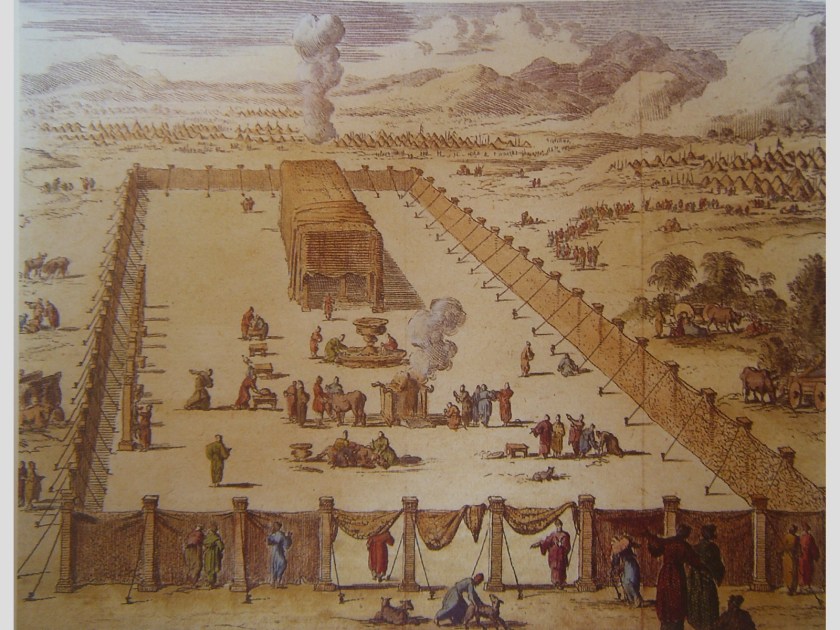
mishkan

In the days of Herod, king of Judea, there was a priest named Zacharias, of the division of Abijah; and he had a wife from the daughters of Aaron, and her name was Elizabeth. (Luke 1:5)

In the first few verses of the book of Luke, we are told about the genealogy of John the Baptist: His father was from the division of Abijah, and his mother from the daughters of Aaron. What does Luke tell us here? And why is this important?

Given that Jews formed the majority of readers of this text in the first century AD, this genealogy was quite significant to Luke’s Jewish audience, providing substantial insight into John’s identity.
We’ll start by stating the conclusion: John the Baptist’s parents came from distinguished priestly families.

Now, all that is left is to explain this, and we go directly to the Bible.

Tribe of Levi in the wilderness and in Canaan

When the sons of Israel wandered in the wilderness, they belonged to twelve different tribes. One of those tribes was Levi. The Tribe of Levi is unique and has a special duty:

And the Lord spoke to Moses, saying: “Bring the tribe of Levi near, and present them before Aaron the priest, that they may serve him. And they shall attend to his needs and the needs of the whole congregation before the tabernacle of meeting, to do the work of the tabernacle. (Numbers 3:5-7)

In the wilderness, the lord instructed Moses, when conquering Canaan, to spare cities for the Levites in the lands of the other tribes. They shall not have their own inheritance but rather will live among the other tribes:

And the Lord spoke to Moses in the plains of Moab by the Jordan across from Jericho, saying: “Command the children of Israel that they give the Levites cities to dwell in from the inheritance of their possession, and you shall also give the Levites common-land around the cities. (Numbers 31:1-2)

In the book of Joshua, we learn that there were 48 cities given to the Levites. To name a few: Hebron, Gezer, and Shechem.

Three families from the tribe of Levi and their roles

The most common surname among Jews today is “Cohen“. Jewish men, sons of Cohen families, are not allowed to marry divorced women (Yes! in Israel today, by law. See Leviticus 21:7). On the bright side, Cohens are the ones who come to the stage in the synagogue to bless the “Priestly Blessing” (Birkat Kohanim, also known as Aaronic blessing).

The Jewish surname “Levi” is also very common. But they do not share the same rights and obligations as the Cohens.

The above leads us to the understanding that Cohen (a priest) and Levi are not the same. There is some hierarchy in the tribe of Levi.

In the wilderness, we learn about three families in the tribe of Levi: Gershon, Kohath, and Merari.

The sons of Levi were Gershon, Kohath, and Merari. (Genesis 46:11)

Aaron, the first priest of Israel (Priest in Hebrew – Kohen כֹּהֵן), came from the family of Kohath.

Aaron married Elisheba, the daughter of Amminadab, the sister of Nahshon, and she bore him Nadab and Abihu, Eleazar and Ithamar. (Exodus 6:23)

In I Chronicles 23-26, the Bible describes in detail all the different occupations and roles that the Levites and Kohanim used to have.

The Kohanim were working very hard in the temple with sacrifices and worshiping with musical instruments. The Levites who were not Kohanim were helping them in the service and by keeping order in the temple.

But later on, among the Kohanim, we see different roles and responsibilities.

Zadok the first high priest

So David reigned over all Israel; and David administered judgment and justice to all his people. 16 Joab the son of Zeruiah was over the army; Jehoshaphat the son of Ahilud was recorder; 17 Zadok the son of Ahitub and Ahimelech the son of Abiathar were the priests. (II Samuel, 8:15-17)

So there are many Kohanim, but Zadok and Ahitub got a special position.

There let Zadok the priest and Nathan the prophet anoint him king over Israel; and blow the horn, and say, ‘Long live King Solomon!’ (I Kings 1:34)

In the time of Solomon, Zadok was nominated as the priest who could anoint the new king. We see here the beginning of what will later become “High Priest” – a priest with a special status.

Lilien_High_priest

The Sadducees

What we read above was regarding the first temple. During the Second Temple, a whole new social status emerged:

The Sadducees (Zedukim in Hebrew) were a group of priests who were responsible for the work in the Second Temple. The name “Zedukim” might very probably be derived from “Zadok“, the first High Priest. They were considered the spiritual leaders of Judea until the destruction of the Second Temple by the Romans in 30 AD.

We do not know a lot about them. Most of what we know is what other people wrote about them, because after the destruction of the Second Temple, as they lost their position in the temple, they became irrelevant as spiritual leaders.

One interesting fact that the New Testament teaches about the Sadducees that is not known from any other source is that, in contrast to the Pharisees, they did not believe in the resurrection:

Then some Sadducees, who say there is no resurrection, came to Him; and they asked Him… (Mark 12:18)

Priestly Divisions

Now these are the divisions of the sons of Aaron… …the eighth to Abijah (I Chronicles 24, 1,10)

The work in the temple was very hard – people came with their sacrifices, and they needed to be served all the time. In order to help in this work, the Levites worked in shifts.

Zadok and David divided the work of the Kohanim between 24 men. All descendants of the family of Aaron – Kohath. Those are the priestly divisions or priestly shifts. David and Zadok made the choice by lot. The eighth lot fell to Abijah.

Summary

Looking back to where we started, “a priest named Zacharias, of the division of Abijah“. This tells that not only is Zacharias a priest, but he is a direct descendant of one of the 24 divisions from the time of King David.

“he had a wife from the daughters of Aaron, and her name was Elizabeth.” The wife was from the family of Aaron, the family of the Kohanim. And she was called after Aaron’s wife – Elisheba. (Elizabeth is Elisheba in Hebrew).

Joshua and Zionism – from trouble to hope

yarkon

1882 marks the inception of the Zionist movement. The first Zionist settlement was set up this year.

The village was founded in a swamp area in the Sharon and was called Petah-Tikva.

Joshua leads the sons of Israel into Canaan

The Taking of Jericho

When the people of Israel entered Canaan from the east, they were not considered Zionists. Zion was a place they had not heard about yet.

God had commanded them to conquer the country from the seven Canaanite nations that inhabited the land.

The first city they conquer and destroy was Jericho. Two spies went to Rahab’s house, and she hid them. For seven days, the people of Israel marched around the city; on the seventh day, they blew trumpets, and the walls came down. God was undeniably with the people of Israel.

Joshua warned the people not to take anything from the city, as it is under a ban.

Then, they went on to conquer the second city – Ai, but they failed badly… Something went wrong. Joshua cried to the Lord and asked – Why is that, Lord? and the answer came clearly:

Israel has sinned, and they have also transgressed My covenant which I commanded them. For they have even taken some of the accursed things, and have both stolen and deceived; and they have also put it among their own stuff. 12 Therefore the children of Israel could not stand before their enemies, but turned their backs before their enemies, because they have become doomed to destruction (Joshua 7:11-12)

The Lord instructed Joshua on how to find the person who did wrong. It came out that it was Achan from the tribe of Judah.

Interestingly, in Chronicles, the name changes from Achan to Achar:

The son of Carmi was Achar, the troubler of Israel, who transgressed in the accursed thing (1 Chronicles 2:7)

This is interesting, because the Hebrew word for “trouler” in the Bible is “Ocher“, which is from the same root as the name “Achar” and literally means “bring trouble or darkness“.

Achan, with all his family, was sentenced to be stoned. Where did that happen? let’s read:

Then they raised over him a great heap of stones, still there to this day. So the Lord turned from the fierceness of His anger. Therefore the name of that place has been called the Valley of Achor to this day (Joshua 7:26)

The Hebrew root A.Ch.R. appears three times in our story:

  • Achar (or Achan) – the name of the sinner
  • Ocher – an adjective that means troubler, or literally “darkens”
  • Achor – the valley where he was stoned.  Near Jericho.

achan

A prophecy of hope

Let’s move to another book in the Bible. Hosea.

Hosea speaks about the restoration of Israel.

In the second chapter of the book, he compares Israel to a treacherous wife. He describes all her harlotry and unfaithful ways.

But then the Lord takes her to the desert, and there, after all her lovers have left her, the Lord restores Israel. Then Hosea prophesies:

Then I will give her her vineyards from there,
And the valley of Achor as a door of hope (Hosea 2:15)

This verse takes us back to the story of Achan in the valley of Achor.

The Zionist movement begins

In the year 1872, a few families from Jerusalem tried to buy land in Jericho and build a new agricultural village. The name they wanted to give to the village was Petah-Tikva, which means “Entrance of Hope” to fulfill the prophecy of Hosea.

They were not successful in buying the land in Jericho, but ended up buying a swamp area in the Sharon from an Arab family in Jaffa.

Life was too hard in the swamp, and after three years, the village was abandoned.

Seven years later, in 1882, the village was restored by new settlers. This year marks the beginning of the first wave of Zionists moving to Israel and building new settlements.

The location of Petah Tikva in the Sharon instead of Jericho is a fulfillment of another prophecy:

Sharon will be a pasture land for flocks,
And the valley of Achor a resting place for herds (Isaiah 65:10)

The Zionist movement, just like Joshua, brought the people of Israel back to their land.

And the city of Petah Tikva is a symbol for the restoration of Israel.